
The TellTale Story
The TellTale Lie is a historical fiction, identity mystery for adults, set in 1968 Vancouver, Paris, and Turkey
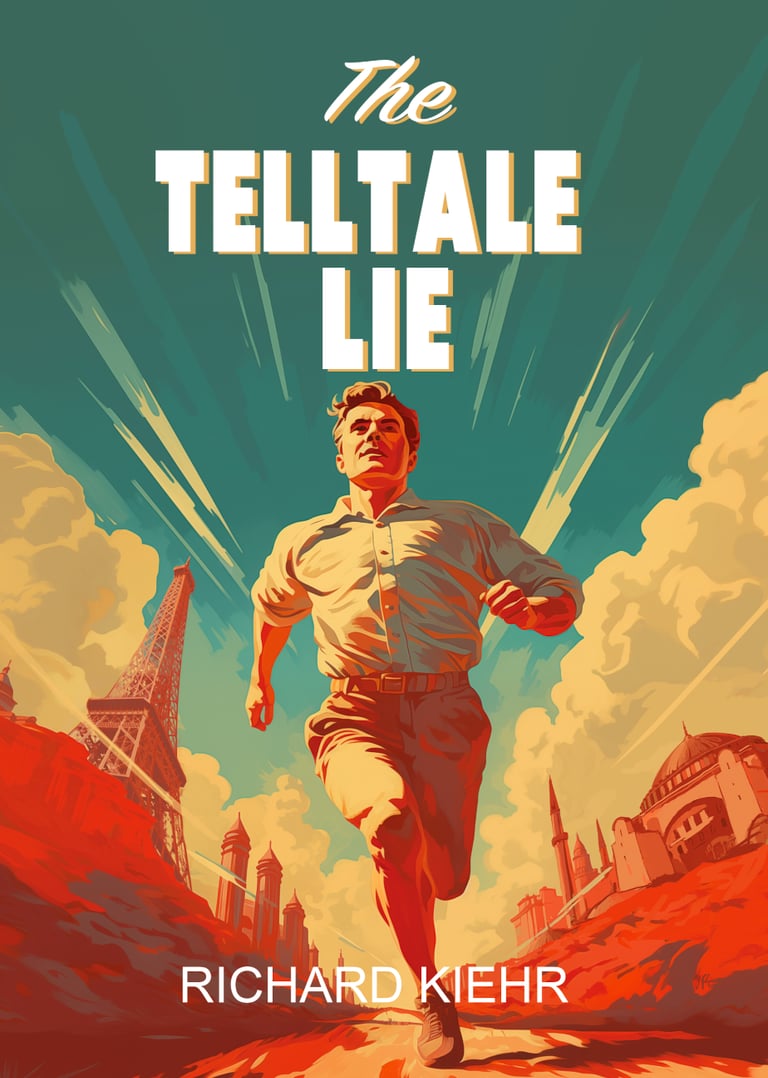
Treyton Chase’s world is turned upside down when he discovers, in mid-life, he was adopted. The revelation sends him to Paris to meet his long-lost sister, only to be swept up in the chaos of the May ’68 riots. But the revolution pushes him into a deeper mystery of espionage and a sister who may not be all she claims. He becomes the hunted and flees the turmoil, landing in Turkey, where he finally begins to piece together the truth about his birth parents – renowned French archaeologists – and the secretive work they undertook in a remote corner of the Ottoman Empire during the height of World War I.
The Next Book in the TellTale Series
“Falsehood flies, and the truth comes limping after it.”
— Jonathan Swift —


Synopsis
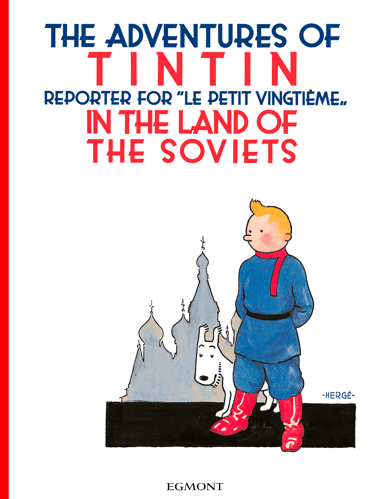
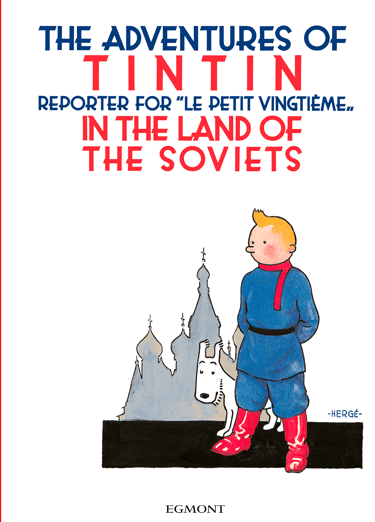
The TellTale Lie was inspired by a love of history, travel and Tintin comic books. One might even say this novel is just a bit more sophisticated version of a good globetrotting Tintin mystery. My favorite stories are ones that are entertaining, surprising & engaging, with a solid poignant layer that underlines it all.
The TellTale Trap is the fast-paced adventure sequel that weaves an edge-of-your-seat treasure hunt with a contemplation on the acquisition of wealth. In whose hands is extreme wealth a good thing?
The Inspiration
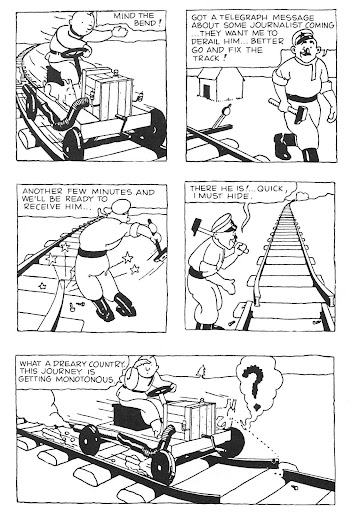
1960's Vancouver was a shadow of the modern metropolis, but many of its iconic features have remained and are on display in this story, such as Christ Church Cathedral, the city of West Vancouver (aka 'West Van'), the University of British Columbia, as well as its vibrant and active international harbour.
I tried to be as accurate as possible in my references to the adoption systems in early 20th-century Canada and France. I highlighted a process that was still forming and carrying the baggage and biases of the mother countries and earlier times, and I used these to sow doubt and hope in Trey's own search.
Vancouver
France
Most people are inclined to think of modern France primarily shaped by the revolution of the late 18th century. While true, this tends to overlook the significance of the 1968 May protests, a unique event that brought France to a standstill and nearly toppled the de Gaulle government. In my opinion, this singular moment gave the people of France the boldness and strength of will that has inspired every strike since that date. And, with every new strike, there is a sense of trying to tap into the same spirit of 1968.
The TellTale Lie follows the day-by-day events of the May '68 protests, from their inception to their peak, while adding several layers of political intrigue that may or may not be precisely true to the history books. However, I've done my best to be accurate to the chronology and true to the political climate of the times, even amidst some conflicting research. It is possible that references to protest size, dates and locations are only accurate to within a day on either side of the details in the book.
Turkey
Events in Istanbul take place almost exclusively in the Old Town, including the Hagia Sophia, Gülhane Park, and the Sirkeci train terminal. The Ottoman Archives and the Archaeology Museum are real locations in the Old Town, but I have taken liberties on the presentation of these offices and how they were managed.
The city of Van in the far eastern part of the country has changed a lot since the 1960s, but is virtually unrecognizable from the town that existed pre-World War I, which was destroyed. I have taken liberties in what remained from the Great War, such as the hospital, which was inspired by an actual run-down hospital in 1990's Van.
The Orient Express
The Orient Express description and itinerary are meant to be accurate to the period, and specific to the Direct-Orient-Express line, which ran from Paris to Istanbul until 1977. This includes the days and time of the various country stops along the route. Though the Paris departure time is accurate (11:50 pm), I was never able to definitively confirm whether the train actually left the besieged city on May 24th, 1968.
Research & Background
The Artwork
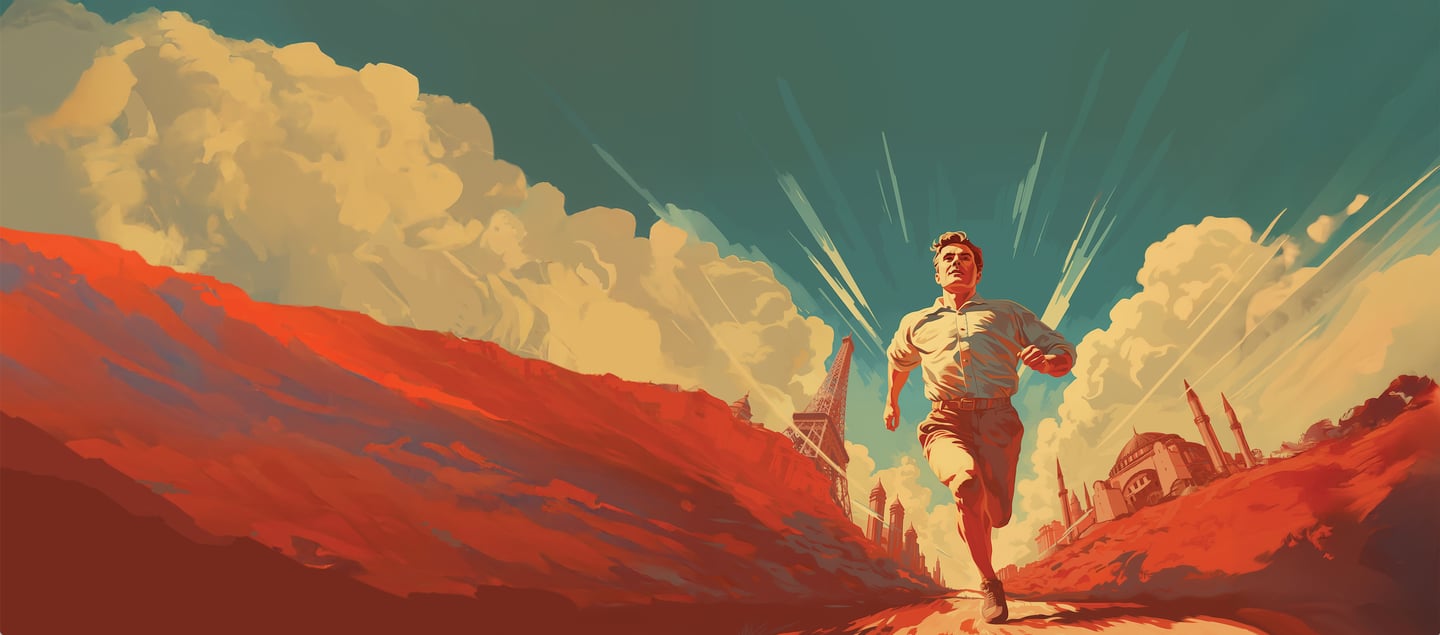
The cover design was inspired by both Soviet propaganda art and early 20th-century travel posters, done in the three sepia-toned colours of the French flag. It depicts a man on an endless run through places featured in the novel.
It was roughed out using an early incarnation of MidJourney, then completed by graphic artist/art director, Kent Matheson.
Contact
Questions, feedback, or just want to say hi?
© 2026. All rights reserved.